



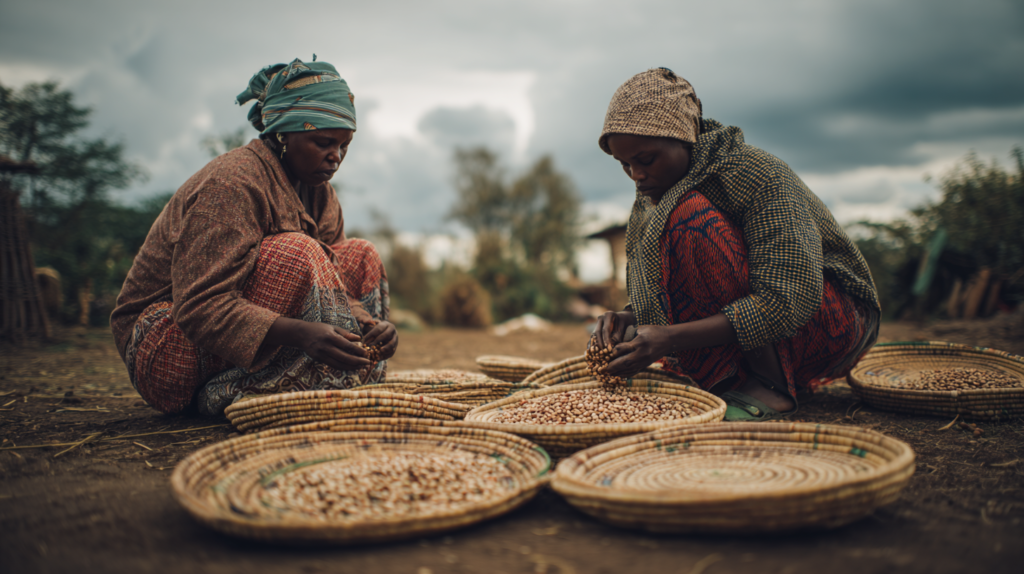
For decades, Kenyan farmers have sustained their communities and food systems through traditional seed practices—saving, sharing, and exchanging seeds adapted to local climates and communities. But recent laws governing seeds have undermined those practices, favouring corporate seed systems and damaging farmer autonomy, biodiversity, and food sovereignty.
1. From Tradition to Punishment: The Legal Shift
At the centre of the controversy is the Seeds and Plant Varieties Act (Cap. 326), originally enacted in 1972 and amended multiple times, with major changes in 2012 and thereafter. Under its provisions, farmers risked fines of up to KSh 1 million or two years in prison for saving, selling, or sharing seeds that were not formally certified under the law.
These are practices that have sustained African agriculture for generations—especially among smallholder farmers who make up the backbone of Kenya’s agricultural sector. Informal seed systems supply a large majority of the seeds used in Kenyan food production, yet the law treated them as illegal unless they passed expensive certification procedures.
2. Favoring Corporations Over Communities
Critics argue that the law essentially privileges large multinational seed companies and commercial breeders by enforcing intellectual property protections over genetically diverse, locally developed seeds.
Under sections introduced in later amendments:
- Breeders hold exclusive rights over protected varieties, including control over seeds derived from them.
- Selling or displaying seed that is not certified—even if locally adapted and effective—is prohibited.
- Only registered seed merchants can legally import, process, sell, or market seeds.
From the perspective of multinational seed firms such as Bayer or Syngenta, this strengthens commercial seed markets. From the perspective of farmers, it marginalises indigenous seeds and the informal seed economy upon which they depend.
3. Impact on Farmers and Food Systems
The effects of this legal framework have been profound:
- Criminalisation of traditional practices: Farmers could face prosecution for saving, exchanging, or selling seed varieties that are central to their livelihoods.
- Loss of biodiversity: Formal seed certification tends to emphasize uniform, high-yield commercial varieties. This can displace indigenous types well adapted to local conditions, reducing genetic diversity and resilience to droughts or pests.
- Financial burden: Smallholder farmers face the cost of buying certified seed every season rather than saving seed from their own harvests—an added expense that many can ill afford.
- Threat to cultural heritage: Seed sharing isn’t just an agricultural activity but a social and cultural practice, linking communities and knowledge across generations.
4. Legal Pushback and a Landmark Win
Responding to the law’s impact, farmers and civil society groups challenged its constitutionality in Kenya’s High Court. The legal petition argued that the law unfairly targeted small farmers and privileged commercial interests over farmers’ rights and food sovereignty.
In a landmark November 2025 ruling, the High Court declared parts of the law unconstitutional, particularly those that prohibited the sharing and selling of indigenous seeds and allowed officials to seize seeds from community banks. The court found such provisions discriminatory for failing to treat smallholders and commercial seed producers equally.
Advocates hailed the ruling as a victory for food sovereignty, affirming that farmers’ ability to save and share seeds is fundamental to Kenya’s food security and cultural heritage.
5. Ongoing Debate and Future Risks
Despite the court victory, the debate continues. Some government officials have expressed concerns about counterfeit seeds—poor-quality or fraudulent products sold as certified varieties—which have caused losses for farmers. There are calls for stronger protections and law enforcement to defend farmers from harmful seed fraud.
Meanwhile, some groups fear that efforts persist to appeal the court ruling or revise seed laws once more, pushing back against farmers’ win and potentially reinstating restrictions that favour corporate seed markets.
Conclusion
Kenya’s seed law transformed what once were traditional, community-based practices into criminalised activities subject to heavy fines and penalties. By prioritising certified, commercially regulated seeds and granting broad proprietary rights to breeders, the law undermined smallholder farmers, reduced agricultural diversity, and threatened food sovereignty. Recent legal pushback and court rulings mark significant progress for farmers’ rights—but the struggle over control of seeds, and thus the future of Kenya’s food systems, remains very much alive.




It’s a crazy world we live in where a practice that has been done for thousands of years is now illegal!